
How I Think About Therapy
Attachment-Focused and Psychodynamic Therapy in Pennsylvania
We repeat what we haven’t yet had the chance to understand.
What brings you here has likely been happening for some time, often across different areas of your life - relationships that feel familiar in painful ways, or difficulty saying what you need even when you know it matters. It’s a sign of unfinished business.
We often move through these patterns on autopilot, without fully seeing them from the inside.
In therapy, these patterns become easier to notice in the context of a safe, nonjudgmental relationship.
As awareness grows, space opens up between impulse and action, creating room to respond differently.
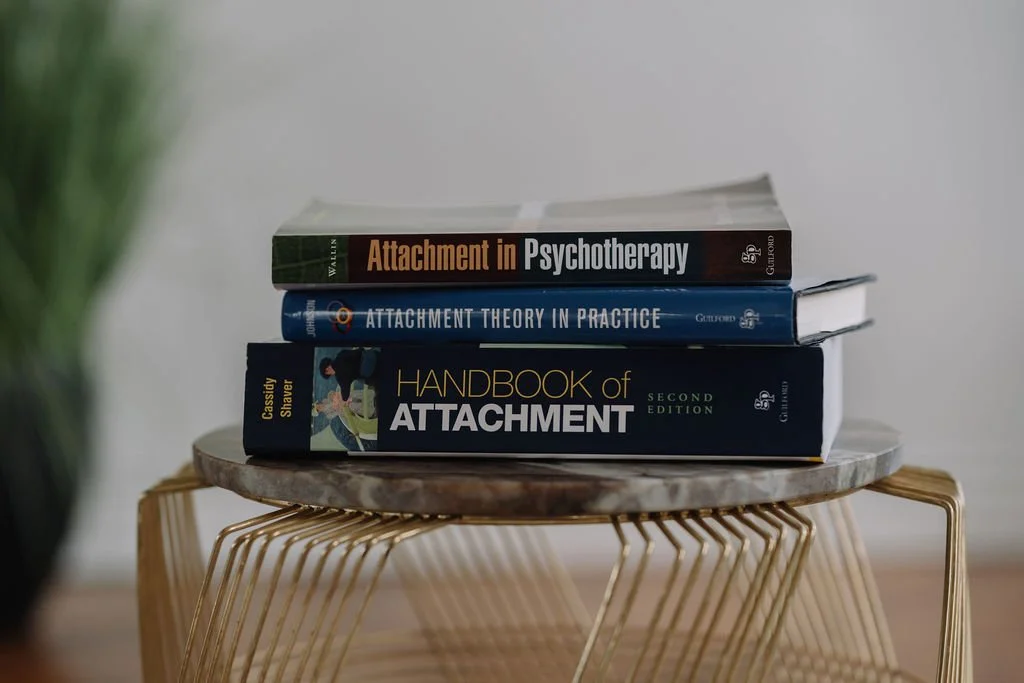
There is a reason you feel the way you do, and together, we’ll make sense of it.
Therapy with me is not just about adding coping skills or communication strategies on top of what you’re already experiencing.
While those tools can be helpful, my focus is on understanding what is underneath the patterns that bring you to therapy in the first place.
Most often, these patterns are rooted in how we learned to seek connection, protect ourselves, and navigate relationships over time. What may once have been adaptive can begin to feel limiting or painful in the present.

We’ll become curious together about your inner world.
Therapy begins with curiosity, not certainty.
We slow down and pay attention to your thoughts, emotions, and relational experiences as they show up - not to judge them or fix them, but to understand what they might be communicating.
While I bring clinical understanding and years of training, your inner world is not something that can be fully understood from the outside. It unfolds uniquely, in real time, as we begin to explore it together.
There is often a sense that something feels stuck or repetitive, even when it’s hard to explain why. In therapy, we begin to gently make sense of those patterns together.
Therapy is not something done to you. It is something done with you.
This work is collaborative. It is not about one person analyzing another, but about two people paying attention together to what emerges in the room.
That shared attention creates space for patterns to become clearer and for new ways of understanding yourself to develop over time.
Therapy becomes a place where you are not observed from a distance, but engaged with directly, in a steady and relational way.
And in that experience, something new often becomes possible.
Healing comes through new experiences, not just new explanations
Many of the ways we learn to relate, regulate emotion, and seek connection develop very early in life, before we have language for them. Because of this, they are often not fully changed through insight alone.
Instead, change happens in relationship.
In therapy, the aim is to create a new relational experience, where all parts of you are welcome, and where you do not have to edit or hold yourself together in order to stay connected.
As attachment researcher Donald Winnicott described, the therapist’s role is similar to a “secure base” from which a person can begin to explore themselves and the world more freely.
Over time, this kind of experience can make it possible to try new ways of relating, both in and outside of therapy.

Over time, what once felt automatic begins to feel more spacious and less controlling.
With greater awareness of your patterns, new relational experiences, and increased self-understanding, something begins to shift internally.
You start to notice a moment of pause where there used to be automatic reaction. You find yourself saying something directly that you might have once held in. You experience a little more space to respond rather than react.
And slowly, life begins to feel less governed by old patterns and more shaped by choice.
Ready to take the next steps?
If this way of working resonates with you, we can talk about what you’re looking for and whether it feels like a good fit.